Measuring What Matters for Blog Automation: Tracking Engagement and Conversions Realistically
- Get link
- X
- Other Apps
Why measurement matters in an AI blog content workflow
AI article writing and blog automation can speed up content creation, but measurement is what makes the workflow repeatable and trustworthy. Prioritize outcomes that match the blog’s purpose: meaningful engagement (readers explore) and conversions (readers take a next step). Good tracking also helps you refine writing profiles, blog templates, and SEO-friendly writing patterns over time.
Engagement KPIs that signal real usefulness
Pick a small set of KPIs that reflect discovery and on-page value:
- Organic impressions and clicks (search visibility and title/meta performance).
- Engagement time or an equivalent interaction metric.
- Scroll depth or long-session rate (where available).
- Pages per session and returning visitors (content usefulness and internal navigation quality).
To avoid confusing signals, group posts by intent (informational, how-to, comparison) and compare within that group. If performance changes sharply, check for indexing delays, publish timing, or sharing activity before assuming a content-quality cause.
Conversion metrics that fit small business blogging
Define conversions from your business goal and what your platform can track. Common options include:
- Email signup or newsletter subscription.
- Lead capture through a form or contact flow.
- Service or booking actions (clicks to primary pages).
- Resource downloads if your workflow supports them.
- Key internal actions such as clicks to “start here” guides.
For many small businesses, a practical choice is a measurable click to a primary page already tracked in analytics, such as a service landing page or a scheduling flow.
Scheduled publishing vs. automatic publishing: what to compare
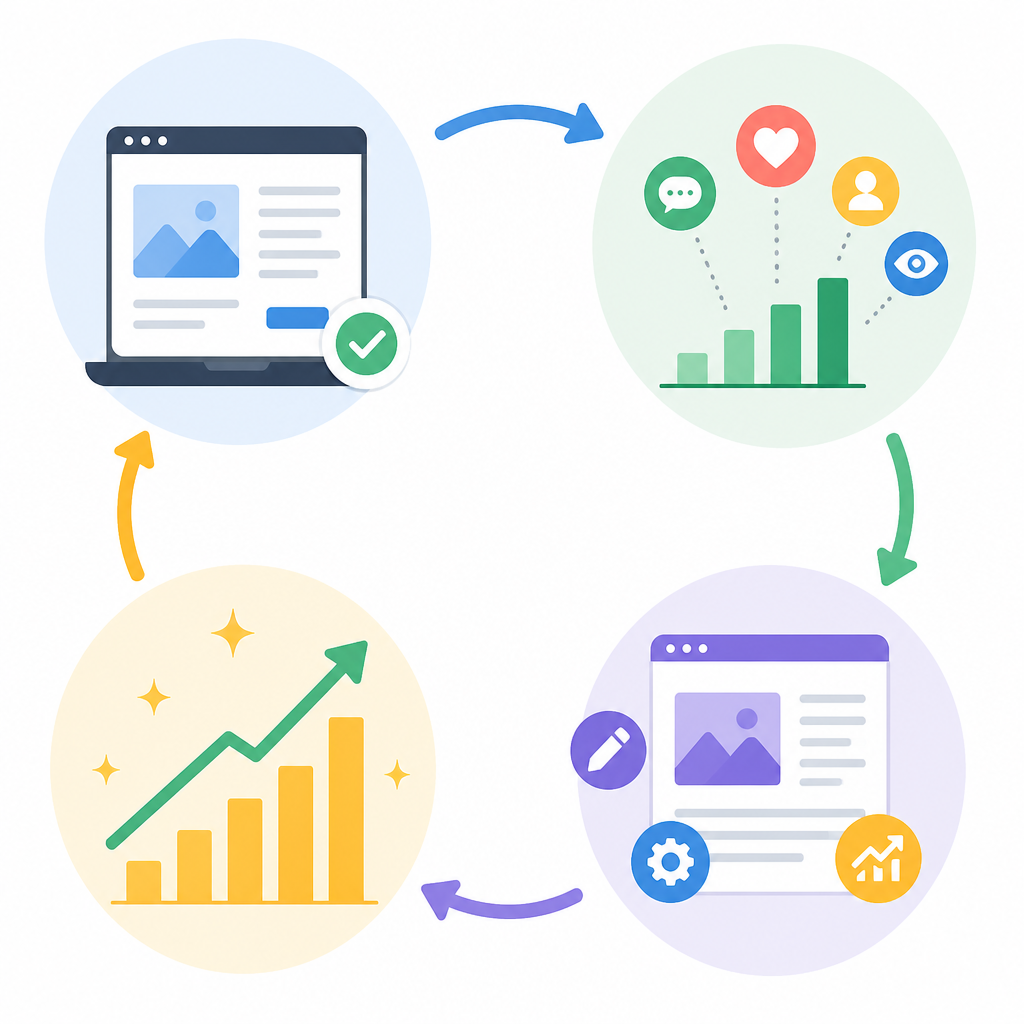
With scheduled publishing, you can follow a consistent cycle (draft → edit → schedule) and compare results across similar time windows. With automatic publishing, the main risk is going live before formatting, relevance checks, QA, or compliance notes are complete, which can reduce engagement through avoidable issues like inconsistent structure or citation weaknesses. Measure fairly by comparing outcomes by publish method while keeping your quality checks aligned.
Attribution and reporting without overclaiming
Don’t assume one post “caused” a conversion. Use reporting that matches how buyers actually browse:
- Review assisted conversions when your analytics tool provides them.
- Use a realistic time window (often 7–30 days for many small businesses).
- Compare by intent cluster and content age, not only by absolute results.
- Document workflow updates (new blog templates, revised writing profiles, improved internal linking) so changes can be explained.
A simple weekly measurement routine
Run a short checklist each week:
- Review the top 5 posts by organic clicks and the top 5 by engaged sessions.
- Update titles/meta when pages show strong impressions but weak CTR.
- Improve calls-to-action and internal linking when pages show engagement but low conversion clicks.
- If performance drops after an edit, re-check headings, formatting, citations, and images for unintended changes.
Key takeaways
A repeatable blog content workflow using AI becomes dependable when you track the right engagement KPIs, define conversions that match your goals, and interpret attribution within sensible time windows. With consistent review, clear writing profiles, and structured reporting, your SEO-friendly writing and your Google Blogger publishing or WordPress publishing decisions improve based on measurable outcomes rather than expectations.
- Get link
- X
- Other Apps
Comments
Post a Comment